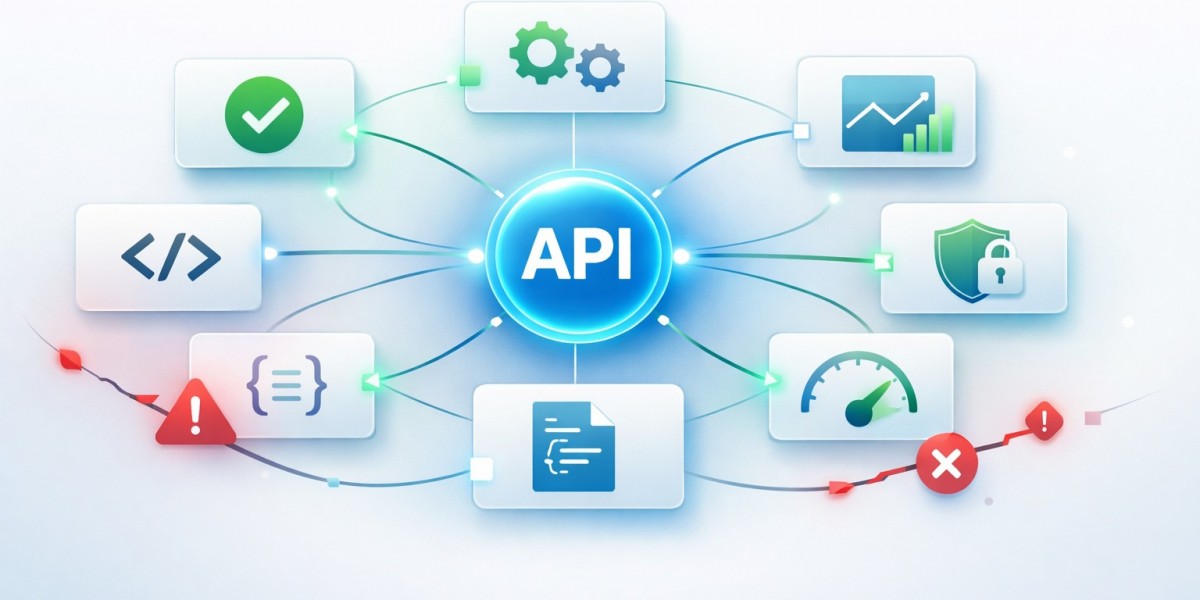

In today’s fast-moving development landscape, APIs are the backbone of modern applications. Whether you're building microservices, mobile apps, or SaaS platforms, ensuring your APIs work reliably is non-negotiable. This is where API testing strategies become critical.
A well-defined API testing approach helps teams catch bugs early, improve performance, and deliver stable integrations across services.
Why API Testing Matters
Unlike UI testing, API testing focuses on the core business logic of an application. It ensures that data flows correctly between systems, endpoints respond as expected, and edge cases are handled properly.
Effective API testing helps:
Detect issues before they reach production
Validate data accuracy and response structures
Ensure system reliability under different conditions
Reduce dependency on frontend testing
Key API Testing Strategies
1. Start with Clear Test Planning
Before writing test cases, define what needs to be tested. Identify endpoints, expected inputs and outputs, authentication methods, and edge cases. A clear plan reduces redundant testing and improves coverage.
2. Use Automated Testing
Manual testing doesn’t scale well for APIs. Automation tools allow you to run tests continuously during development and deployment. This ensures quick feedback and consistent validation.
3. Validate Response Data Thoroughly
Don’t just check status codes. Validate:
Response body structure
Data types
Required fields
Business logic correctness
Even a successful 200 response can hide incorrect data.
4. Test for Edge Cases and Negative Scenarios
Good API testing goes beyond happy paths. Test scenarios like:
Invalid inputs
Missing parameters
Unauthorized access
Rate limiting
This ensures your API behaves predictably under unexpected conditions.
5. Focus on Performance Testing
APIs must handle real-world traffic. Performance testing helps identify:
Slow endpoints
Bottlenecks
Scalability limits
Load testing tools can simulate thousands of requests to evaluate system behavior.
6. Implement Continuous Testing in CI/CD
Integrating API tests into your CI/CD pipeline ensures every code change is validated automatically. This reduces regression issues and speeds up releases.
7. Mock Dependencies When Needed
In distributed systems, APIs often depend on other services. Use mocking to isolate tests and avoid failures caused by unavailable dependencies.
Common Challenges in API Testing
Even with the right strategies, teams face challenges like:
Managing test data
Handling dynamic responses
Maintaining test scripts over time
Dealing with flaky tests
Addressing these requires proper tooling and consistent practices.
Best Practices to Follow
Keep test cases modular and reusable
Use version control for test scripts
Maintain proper documentation
Regularly update tests as APIs evolve
Monitor test results and fix failures promptly
Final Thoughts
API testing is no longer optional—it’s essential for delivering reliable software. By adopting the right API testing strategies, teams can ensure better quality, faster releases, and improved user experiences.
A structured approach combined with automation and continuous testing can significantly reduce production risks and make your systems more dependable.
Try keploy.io