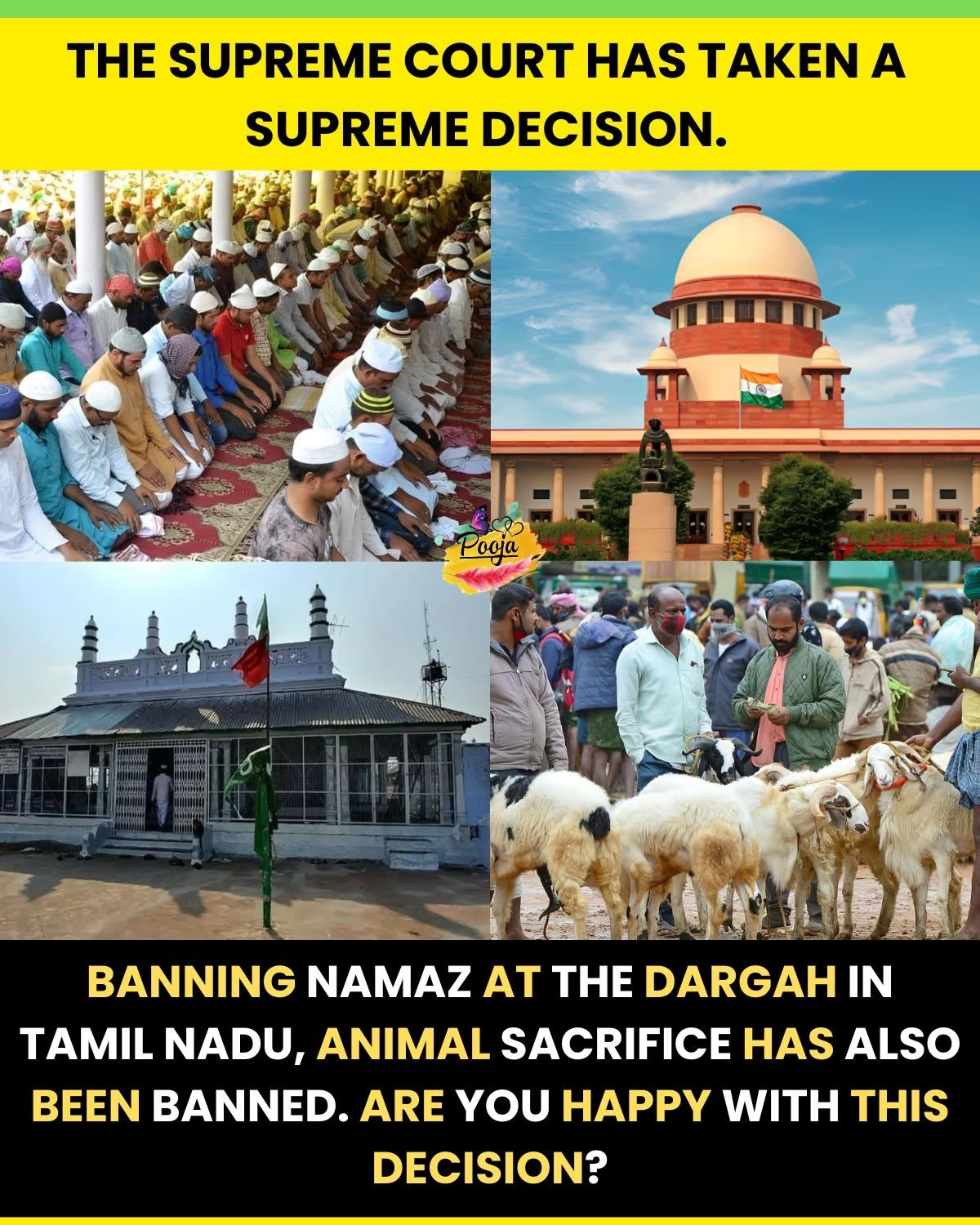
A major legal development has come from the Supreme Court of India in the Thirupparankundram Dargah case, bringing fresh attention to the link between law, faith, and public administration. 📜🏛️
The Supreme Court upheld the Madras High Court’s earlier decision and rejected the plea seeking permission for daily namaz and animal sacrifice inside the dargah premises. With this, the existing restrictions will continue to remain in place.
The verdict carries importance beyond this particular dispute. ⚖️📚 Legal observers say it reinforces the idea that religious practices, especially in sensitive or regulated locations, must be examined within the framework of constitutional law and established administrative procedures.
Experts note that courts often have to balance religious rights, public interest, and regulatory responsibilities in such matters. 🏛️✨ Decisions involving faith and public order play an important role in defining legal limits and clarifying the duties of authorities.
The ruling has also restarted wider discussions on how democratic institutions should balance religious freedom with governance needs and public order. 🤝⚖️ Supporters of the decision believe consistent legal standards help maintain clarity and stability, while others see such cases as a chance to further discuss the scope of religious rights in regulated spaces.
For many observers, the judgment highlights the judiciary’s role as a neutral institution that resolves sensitive disputes through legal reasoning rather than public sentiment or politics. 📖🇮🇳
As debate continues, the verdict is likely to remain an important reference point in discussions about religious practices, legal regulation, and the relationship between faith and public administration in India. 🇮🇳✨
#supremecourt #india #judgment #lawandorder #religiousfreedom #constitution