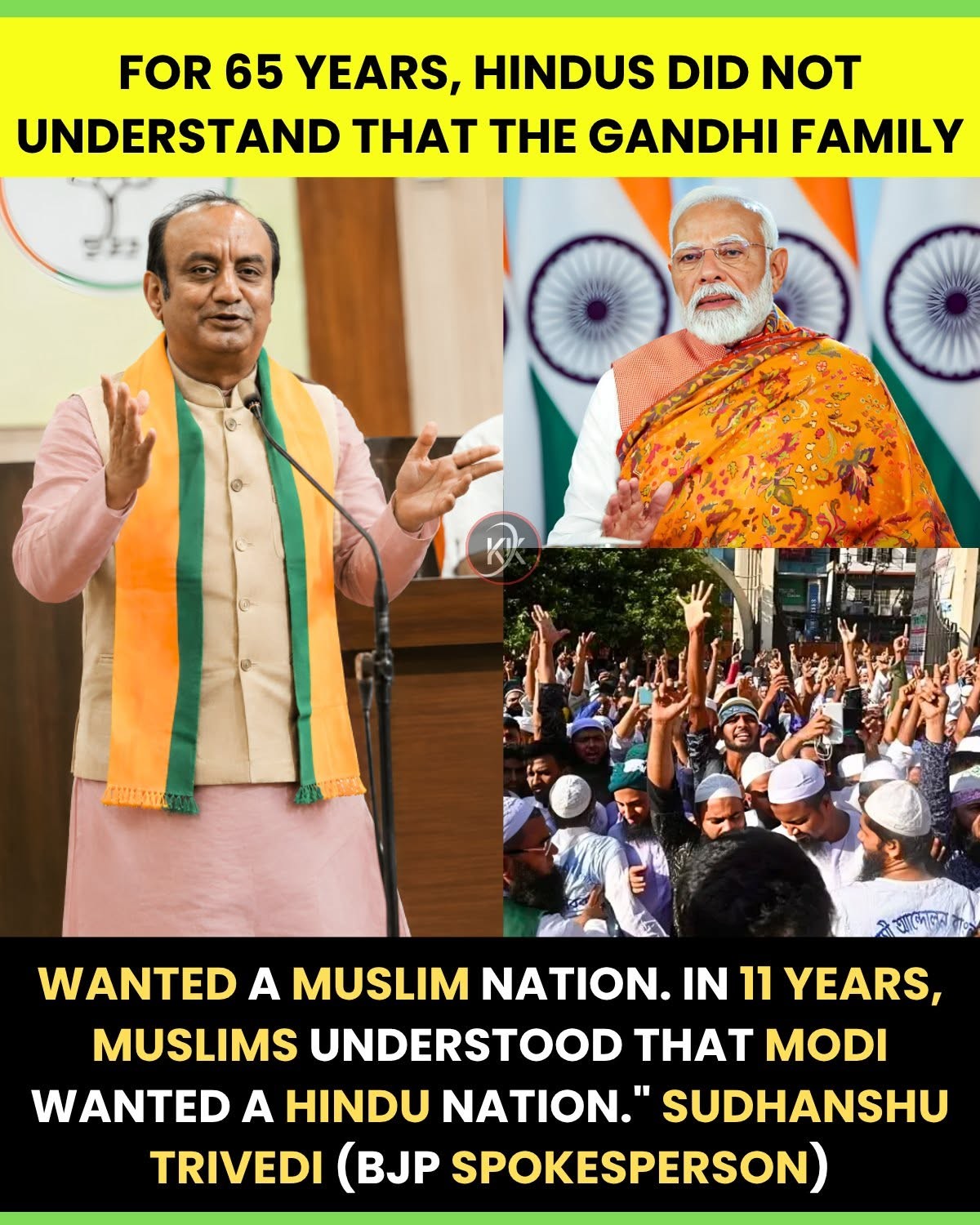
🇮🇳🗣️ A recent political statement attributed to Sudhanshu Trivedi has attracted significant attention and sparked discussion across political circles, media platforms, and social networks. According to reports, he remarked that for many decades Hindus were allegedly unaware of what he described as the Gandhi family's intentions regarding a Muslim nation, while over the past eleven years many Muslims have come to believe that Prime Minister Narendra Modi seeks a Hindu nation. The comment quickly became part of the broader political debate, drawing reactions from supporters, critics, and political observers alike. 📢⚖️
🤔📚 Statements involving religion, identity, and national politics often generate strong public responses in a diverse democracy like India. Supporters may view such remarks as a reflection of ideological differences and historical political debates, while critics argue that comments of this nature can deepen polarization and shift attention away from policy-driven discussions. As a result, the statement has become a talking point in ongoing conversations about political narratives, governance, and public perception.
🌍🏛️ Political ****ysts note that rhetoric surrounding history, identity, and nationhood frequently plays an important role in electoral politics. Such remarks often resonate because they connect with broader discussions about the country's past, present governance models, and future direction. At the same time, experts emphasize that democratic discourse is strongest when debates remain focused on policy outcomes, development priorities, economic progress, and constitutional values.