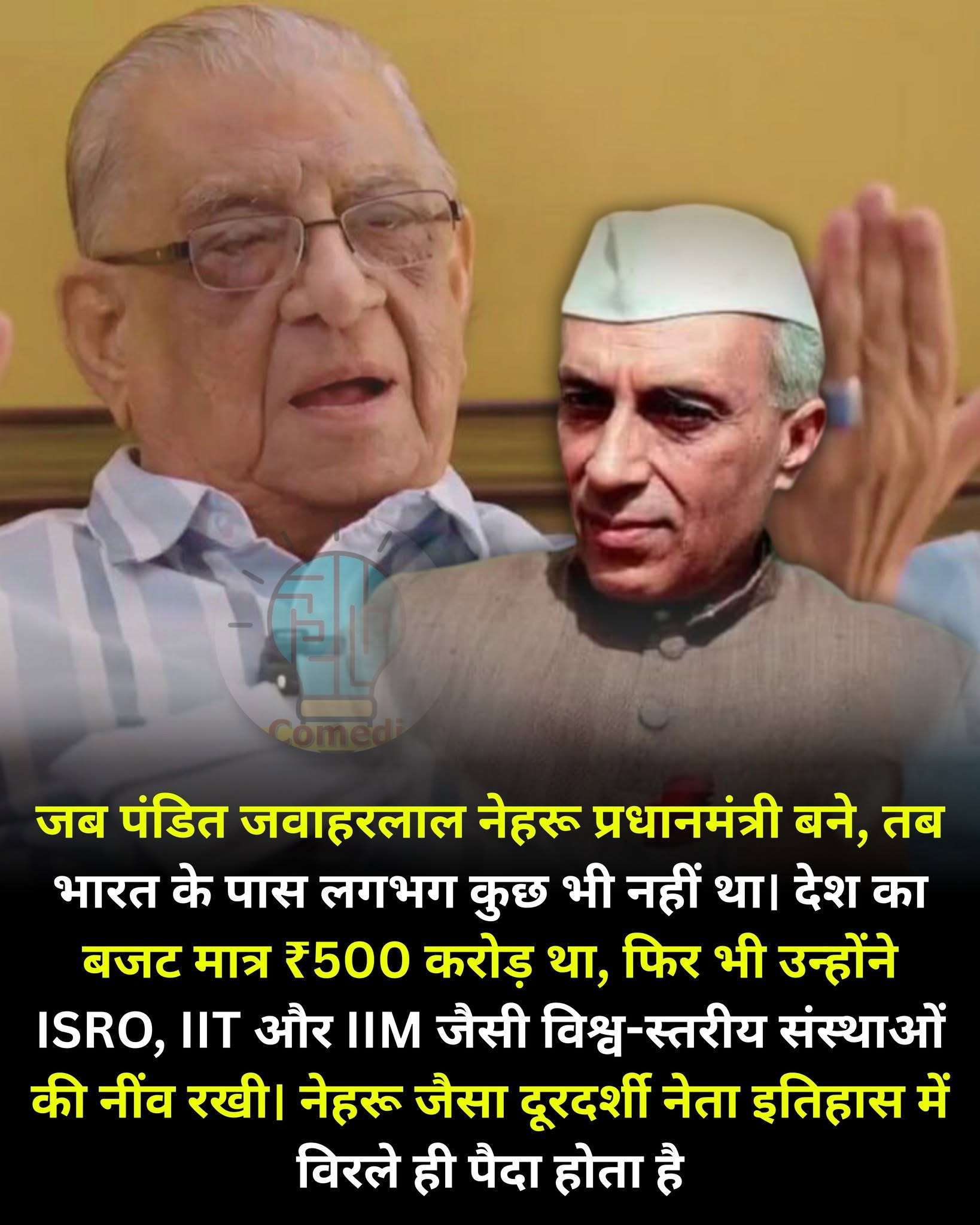
India's early years after independence were filled with enormous challenges, including limited resources, poverty, infrastructure gaps and the task of building strong national institutions. As the country's first Prime Minister, Jawaharlal Nehru played an important role in shaping India's approach to education, science, technology and industrial development.During his tenure, several important educational and scientific institutions were established or strengthened. These included the development of the Indian Institutes of Technology (IITs), the establishment of the Indian Institutes of Management (IIMs) in the early 1960s, and the creation of the foundations for India's space research programme, which eventually led to the formation of ISRO in 1969.Nehru believed that scientific research, higher education and technological progress were essential for India's long-term development. His government's focus on building institutions helped create an important foundation for future generations of scientists, engineers, researchers and professionals.India's progress in science, education and technology has been the result of contributions from many governments, scientists, educators and institutions over several decades. However, the early emphasis on developing national capabilities remains an important chapter in the country's history.
----------
Disclaimer: This post is written in original wording for general historical and educational purposes. Historical references are based on publicly documented information. The claim regarding India's budget being exactly ₹500 crore has not been independently verified and should not be treated as an established figure. This post does not endorse or criticize any political party or leader and aims to encourage informed discussion about India's development.