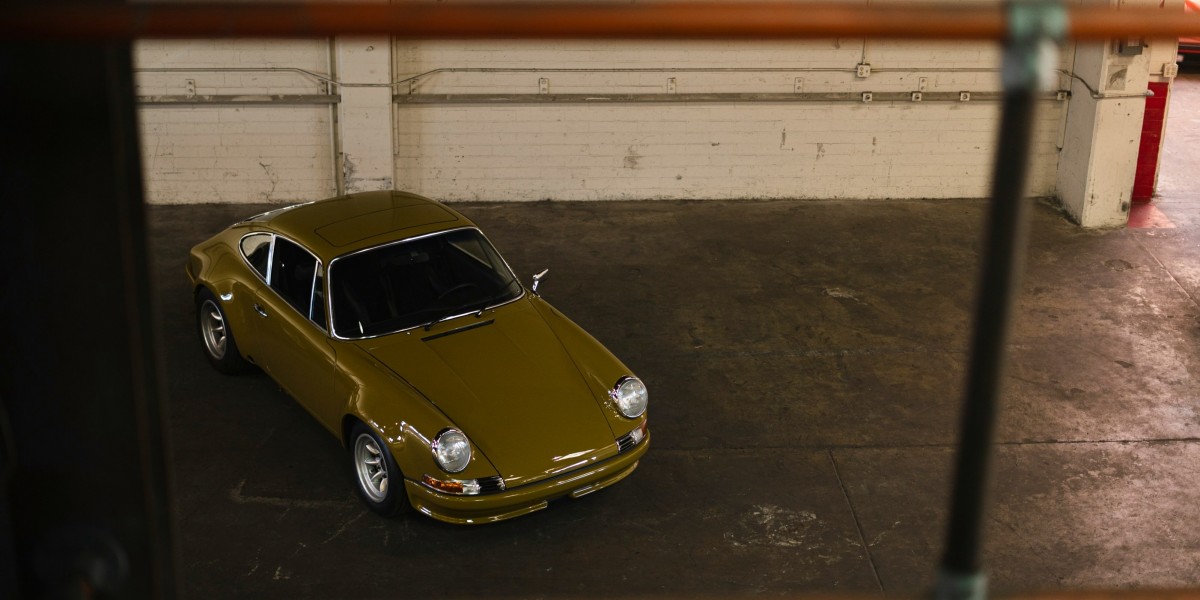

Classic cars are more than machines. For most owners, they represent decades of mechanical artistry, personal memories, and in many cases, a significant financial investment. Whether you own a gleaming 1967 Ford Mustang, a curvaceous E-Type Jaguar, or a brawny muscle car from the golden era of Detroit steel, keeping it in prime condition during storage is one of the most critical responsibilities you will face as a collector. Done right, proper storage preserves both the car's value and its soul. Done carelessly, even a short stint in the wrong environment can undo years of careful restoration work.
If you are located in New South Wales and hunting for the right place to keep your pride and joy safe, the quality of secure self storage in Campbelltown has made it a popular choice among local collectors — and for good reason. But before you even think about where to store your classic, you need to understand how to prepare it. Because a perfectly climate-controlled unit won't save a car that is been put away wrong.
Choosing the Right Storage Environment
The environment where your classic car spends its downtime matters enormously. Classic vehicles — especially those with older paint, rubber seals, chrome trim, and carburetted engines — are far more sensitive to environmental swings than modern cars.
Humidity is the enemy. Moisture in the air accelerates rust on bare metal, causes leather interiors to grow mould, and can seep into mechanical components in ways that don't become obvious until you fire the car up months later and find yourself staring at a seized brake calliper or a rusted fuel line. Ideally, you want a storage space that maintains relative humidity between 40% and 60%. Too dry and rubber seals begin to crack; too moist and everything starts to corrode.
Temperature fluctuations are equally problematic. A garage that bakes in summer and freezes in winter causes materials to expand and contract repeatedly, weakening gaskets, cracking paint, and stressing the very structure of the car over time. Climate-controlled storage units in Campbelltown are particularly well-suited to address this, offering a stable internal environment year-round — which is why collectors in the region have increasingly moved away from using home garages in favour of purpose-built facilities.
Light exposure is a lesser-discussed concern, but UV rays degrade paint clarity, fade interior upholstery, and can even deteriorate rubber components over time. Even in an enclosed space, some units have translucent roofing or unshielded fluorescent lighting that contributes to slow, invisible damage. Ideally, your car should be shielded from both natural and artificial UV light during extended storage.
Preparing Your Classic Car for Storage
The preparation process is where most people either succeed or stumble. The work you do before the car goes into storage often determines what you will find when you come back to it.
Clean it thoroughly — inside and out. This seems obvious, but many owners underestimate how much damage a thin layer of road grime, bird droppings, or tree sap can do over several months. Contaminants left on paintwork will etch into the clearcoat (or bare lacquer on older restorations) during storage. Clean the car as if you are preparing it for a show, then apply a high-quality carnauba wax or paint sealant as a protective barrier.
Do not neglect the interior. Vacuum fabric seats and carpets thoroughly to remove any food particles or organic matter that might attract pests or grow mould. Wipe down leather with a quality conditioner to prevent it from drying and cracking. Leave a couple of moisture-absorbing products — silica gel sachets or a small dehumidifier rod — inside the cabin if you are storing in a non-climate-controlled space.
Change the oil before storage, not after. Used engine oil contains combustion byproducts and acidic compounds that will sit against metal surfaces and slowly corrode them during months of inactivity. Fresh oil protects far better. After the oil change, run the engine briefly to circulate the clean oil throughout the system, then shut it down for storage.
Fill the fuel tank to near capacity and add a quality fuel stabiliser. A full tank leaves less room for moisture to condense inside the tank, while the stabiliser prevents the fuel from degrading, varnishing carburettor jets, or gumming up fuel lines. This step alone prevents one of the most common and frustrating problems collectors face when bringing a stored car back to life.
Disconnect or remove the battery. Even a good battery will self-discharge over time, and a deeply discharged battery can suffer permanent capacity loss. The better option is to remove the battery entirely and store it in a cool, dry location connected to a trickle charger or battery tender. Many modern storage facilities — including various affordable self storage in Campbelltown options — have electrical access inside units, making it easy to maintain your battery without removing it from the premises.
Tyres, Brakes, and the Problem of Flat Spots
One of the more insidious problems with long-term storage is what happens to your tyres. A car sitting stationary with weight concentrated on the same small contact patch for months can develop flat spots — slightly squared-off sections of tyre that cause an unpleasant thumping vibration when you first drive the car again. In severe cases, especially with older tyres, the flat spotting can be permanent.
The simplest solution is to slightly over-inflate the tyres to the upper range of their recommended pressure — this reduces the size of the contact patch and resists deformation. For very long-term storage (a year or more), using purpose-built tyre cradles that distribute the weight more evenly is worth the investment. Some enthusiasts prefer to put their cars on jack stands to remove weight from the tyres entirely, though this introduces its own considerations around suspension components and must be done carefully on properly reinforced lift points.
The brakes deserve attention too. If you apply the handbrake while in storage, there is a real risk that the rear brake pads (or shoes, on older drum systems) will bond lightly to the rotors or drums over time — especially if there is any moisture in the equation. Leave the car in gear instead and use wheel chocks. When you return to the car after an extended absence, don't be surprised if the brakes feel slightly sticky on the first application — this is normal and usually clears quickly.
Pest Prevention
Rodents are a constant threat to stored vehicles. Mice in particular are remarkably good at finding their way into engine bays and cabins, where they build nests in air filters, chew through wiring looms, and cause damage that can run into thousands of dollars. A classic car with cloth-wrapped wiring — common on British and Italian vehicles from the 1950s through to the 1970s — is especially vulnerable.
Block any obvious entry points: the exhaust pipe, the air intake, and any gaps in the firewall. Steel wool stuffed into exhaust outlets works well as a temporary plug (just remember to remove it before starting the car). Rodent deterrent sachets based on peppermint oil can help discourage visitors without leaving behind chemical residues that could damage your car's surfaces.
Choosing a well-maintained storage units in NSW facility with pest control programs in place takes much of this worry off your plate, as reputable operators manage the environment around and between units to minimise the risk.
Covering Your Car Properly
A quality car cover is not optional — it is essential. But not just any cover will do. Avoid plastic or non-breathable covers, which trap moisture against the paint and create exactly the damp microclimate you are trying to prevent. Breathable cotton or flannel-lined covers allow air to circulate while protecting the paint from dust, accidental scrapes, and light.
Make sure the car is completely dry before covering it. Covering a damp car — even one that simply sat in morning dew — is asking for trouble.
Maintaining the Car During Storage
Ideally, your stored classic shouldn't sit completely dormant for months on end. If you have access to your storage unit, visiting every four to six weeks to run the engine up to operating temperature (long enough to drive off any moisture from the exhaust system and warm the oil), check fluid levels, and inspect for any signs of pest activity or fluid leaks is genuinely valuable. Even moving the car a few inches forward and back helps prevent tyre flat spots and keeps brake components from seizing.
If you are keeping your car in a larger storage campus, check that your chosen facility offers easy access during business hours — and ideally after hours too — so that occasional visits don't become a logistical challenge.
Making the Right Storage Choice
For collectors in the Greater Sydney area and surrounds, the decision about where to store a classic car deserves as much thought as the preparation process itself. The right facility offers climate control, security (think CCTV, coded access, and on-site management), pest management, and units large enough to accommodate your vehicle with room to open doors and move around it comfortably.
The growth in quality storage options across the region means that protecting a classic car no longer requires owning a large private garage — something that simply is not feasible for many enthusiasts living in suburban or urban settings. With the right preparation and the right facility, your classic can emerge from a year's storage looking and running exactly as it went in, ready to be enjoyed the moment the sun comes out.
That, in the end, is what all of this effort is about: making sure that when driving season returns, your car is ready for the road — not the workshop.