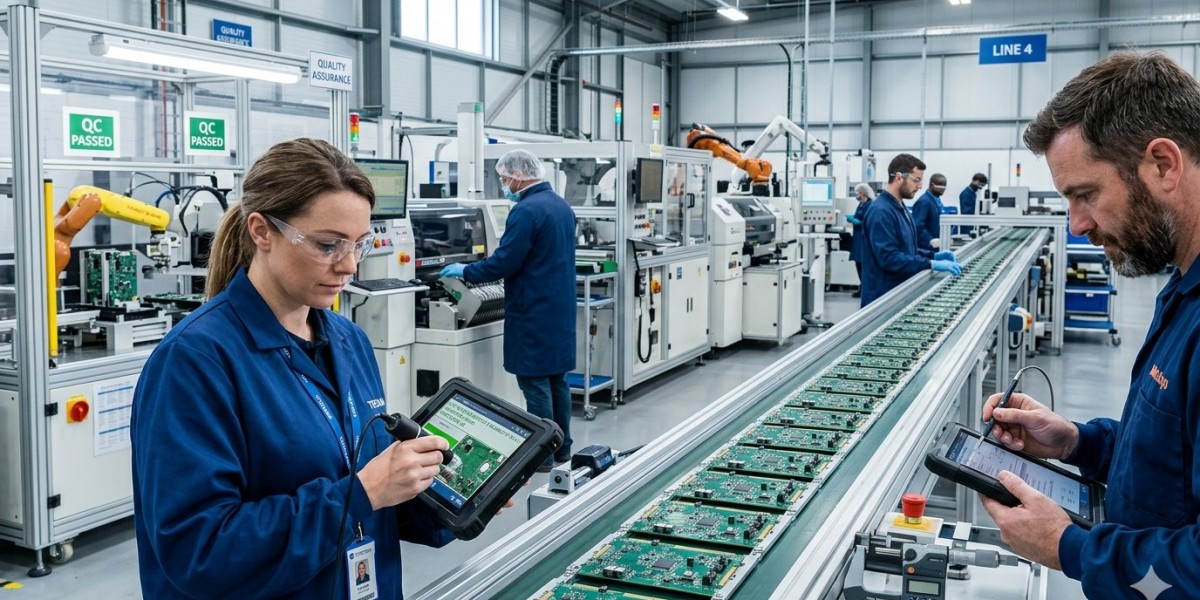

Walk into any store or browse an online marketplace, and you’ll find thousands of products competing for your attention. Some stand out because of their design, while others earn customer loyalty because they consistently perform well. But have you ever wondered why certain brands rarely disappoint? The answer lies in a series of hidden inspections and evaluations that happen long before a product reaches the consumer.
These unseen checks are the backbone of modern manufacturing. They ensure that products remain safe, reliable, and consistent from one batch to another. Behind every trusted item is a system of planning, testing, and monitoring that quietly protects both businesses and consumers. At the center of this system is Product Quality Control, a process that helps manufacturers maintain high standards and avoid costly mistakes.
Why Consistency Matters
Customers expect products to work exactly as advertised. When someone buys a smartphone, a kitchen appliance, or even a simple household item, they assume it will function properly and meet their expectations.
A single defective product can damage a company’s reputation. Multiple defects can result in returns, complaints, and lost customer trust. In today's highly competitive market, reliability is not a luxury—it is a necessity.
This is why manufacturers invest heavily in systems that prevent problems before they happen. Consistency creates confidence, and confidence keeps customers coming back.
The First Check: Evaluating Raw Materials
Every product starts with raw materials. Even the most advanced factory cannot produce reliable products if the materials used are poor in quality.
Manufacturers carefully inspect incoming materials to ensure they meet specific standards. They check for defects, durability, and consistency before production begins. Materials that fail these checks are rejected immediately.
This early stage is an essential part of Product Quality Control because it eliminates potential problems before they enter the production line. A strong product starts with strong materials.
Monitoring Production Every Step of the Way
Once manufacturing begins, quality checks do not stop. In fact, this is where some of the most important inspections take place.
Production lines are continuously monitored to ensure machines are operating correctly and workers are following proper procedures. Inspectors examine products at various stages to identify any signs of defects or inconsistencies.
These checks help manufacturers catch problems early. Instead of discovering defects after thousands of units have been produced, they can make immediate corrections and prevent larger issues.
This proactive approach makes Product Quality Control one of the most valuable tools in modern manufacturing.
The Role of Sampling and Testing
In large-scale production, inspecting every single product is often impossible. Instead, manufacturers use sampling methods.
A selected number of products are removed from production batches and tested thoroughly. These tests may include:
- Performance evaluations
- Durability tests
- Safety inspections
- Dimensional measurements
- Stress testing
If the samples meet quality standards, the production batch is approved. If they fail, further investigations take place.
Sampling helps companies maintain high standards while keeping production efficient and cost-effective.
Human Expertise Still Matters
Technology has transformed manufacturing, but people remain an important part of the quality process.
Experienced inspectors can identify issues that machines sometimes miss. They understand production standards, recognize unusual patterns, and make informed decisions when problems arise.
Skilled professionals often serve as the final line of defense against defective products reaching customers. Their knowledge and attention to detail add another layer of protection to the manufacturing process.
Even in highly automated factories, human judgment continues to play a critical role in Product Quality Control.
Technology Is Making Quality Smarter
Modern factories are becoming increasingly advanced. Artificial intelligence, automated sensors, and digital monitoring systems are helping companies improve accuracy and efficiency.
Smart cameras can identify surface defects in seconds. Sensors can detect small variations that would be difficult for the human eye to notice. Real-time monitoring systems can alert managers when a machine begins operating outside acceptable limits.
These technologies make it easier to maintain consistency across large production volumes. They also reduce waste and improve overall productivity.
As manufacturing evolves, technology is making quality checks faster and more reliable than ever before.
The Cost of Skipping Quality Checks
Some businesses may view inspections as an unnecessary expense, but the reality is quite different.
Poor quality often leads to:
- Product returns
- Customer complaints
- Damage to brand reputation
- Production delays
- Financial losses
- Legal and safety issues
A single defective product can spread quickly across social media and harm a company's image. In severe cases, defective products can even result in recalls and legal action.
This is why companies that prioritize Product Quality Control often perform better in the long run. Investing in quality is usually far less expensive than dealing with the consequences of failure.
Building Customer Trust Through Reliability
Customers may never see the inspections, tests, and evaluations that happen behind the scenes, but they certainly notice the results.
Reliable products create positive experiences. They reduce frustration, improve satisfaction, and encourage repeat purchases. Over time, this builds trust between businesses and consumers.
Many of the world's most respected brands have earned their reputation by consistently delivering dependable products. Their success is not accidental—it is the result of strong quality management systems and attention to detail.
Consistency becomes a competitive advantage, and quality becomes a powerful business asset.
The Future of Product Reliability
Manufacturing continues to change rapidly. Companies are now using data analytics and predictive technologies to identify potential problems before they occur.
Instead of simply reacting to defects, manufacturers are learning how to prevent them entirely. This shift toward predictive systems represents the future of Product Quality Control.
As technology advances, customers can expect even higher standards and more dependable products in the years ahead.
Final Thoughts
Every reliable product has a story that most consumers never see. Behind its performance and durability lies a network of inspections, tests, and evaluations designed to protect quality and maintain consistency.
These unseen checks are essential because they prevent defects, reduce waste, and ensure that products meet customer expectations. Without them, modern manufacturing would struggle to deliver the level of reliability people expect today.
At the heart of this process is Product Quality Control, quietly working behind the scenes to ensure that every product reaching the market is safe, dependable, and worthy of customer trust.
The next time you purchase a product that works perfectly right out of the box, remember that its reliability did not happen by chance. It was the result of countless hidden checks that made quality possible.