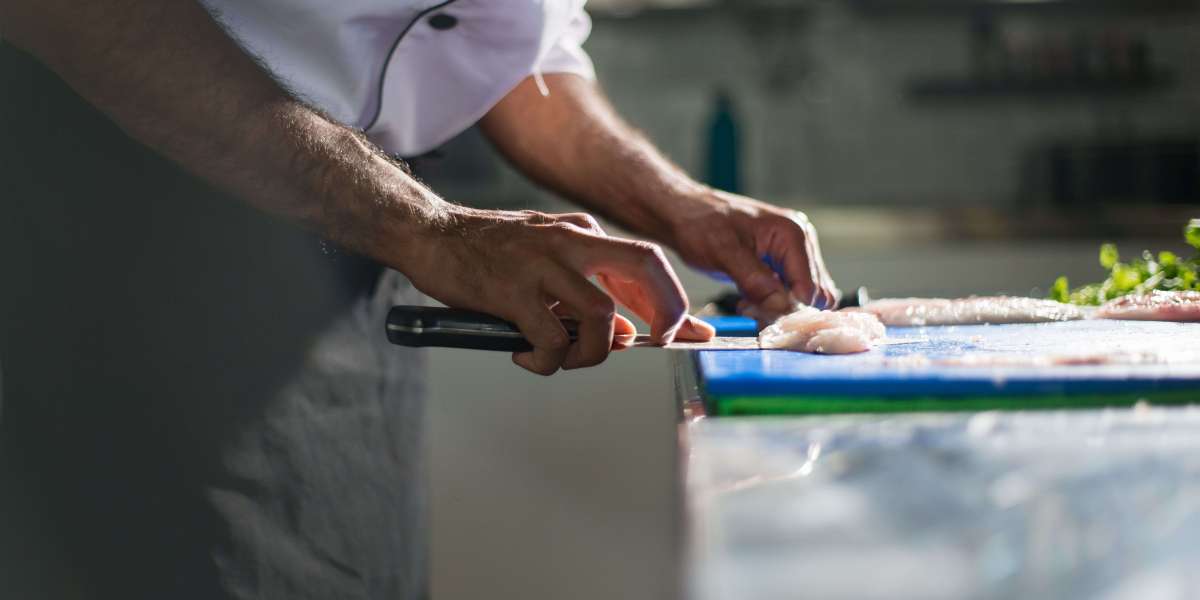

Walk through the loading dock of any serious seafood export company before sunrise, and you will see a kind of choreography that most people never think about. Crates of glistening catch move from boat to ice to inspection table within minutes, each step logged, checked, and double-checked. Behind that quiet efficiency sits a system most consumers have never heard of but rely on every single time they order sushi or grill a fillet for dinner: HACCP, or Hazard Analysis and Critical Control Points. It is not glamorous. It does not show up on restaurant menus or seafood packaging in bold letters. But it is, arguably, the single most important framework standing between the ocean and your dinner plate.
What HACCP Actually Is
HACCP was born out of necessity rather than bureaucratic whim. In the 1960s, NASA and Pillsbury were trying to figure out how to guarantee that food sent into space wouldn't make astronauts sick. There was no room for error hundreds of miles above Earth, so they developed a system that did not just test the final product but identified every point in the production process where something could go wrong — and built in checks to catch those problems before they happened. That logic eventually trickled down into commercial food production, and seafood, given its perishability and unique risk profile, became one of the industries where it mattered most.
At its core, HACCP asks a simple but rigorous question at every stage of handling: what could go wrong here, and how do we stop it? For seafood, that might mean monitoring the temperature of tuna the moment it is hauled aboard a vessel, checking for histamine buildup in scombroid species, screening for parasites in certain raw-consumption products, or verifying that processing water meets potability standards. Each of these checkpoints is called a Critical Control Point, and the entire system is built around catching hazards early rather than discovering them after a product has already reached a dinner table.
Why Seafood Needs It More Than Most
Fish and shellfish are uniquely vulnerable to spoilage and contamination compared to many other proteins. They decompose faster, they are more susceptible to pathogenic bacteria like Vibrio and Listeria, and certain species carry natural toxins or biotoxins that have nothing to do with how cleanly they were handled. Add in the fact that seafood often travels enormous distances — sometimes from a fishing vessel in the middle of the Indian Ocean to a dinner table in Europe or North America within 48 hours — and you start to understand why margin for error is so thin.
This is where the human element of seafood safety becomes apparent. It is not just about machines and thermometers. It is about people on fishing vessels who understand that ice is not optional, it is essential. It is about workers in processing plants who know that a five-degree temperature deviation is not a minor inconvenience but a genuine risk to someone's health. HACCP formalises that vigilance, turning what used to be informal good practice into a documented, auditable, and consistent system that does not rely on any single person's memory or mood that day.
From Ocean to Factory Floor
Among the most demanding sourcing operations are those built around tuna, given how widely it is consumed raw or lightly seared. Operations sourcing the best Indian Ocean tuna have learned to treat every link of the cold chain as a control point in itself, because tuna is particularly susceptible to histamine formation if temperature control slips even briefly during transport. A delay of a few hours without proper icing can be the difference between a safe product and one that triggers scombroid poisoning in someone hundreds of miles away who never even knew the fish had been mishandled.
That sensitivity is exactly why reputable fresh tuna suppliers build their entire operational rhythm around HACCP principles, often going well beyond the legal minimum because their reputation, and frankly their survival in competitive export markets, depends on consistency. Buyers in Japan, the EU, and the US increasingly demand documentation showing exactly how a product was handled from catch to container, and a supplier who can't produce that trail simply does not get the contract.
The Processing Plant: Where Theory Meets Practice
It is tempting to think of HACCP as something that lives mostly on paper, in binders gathering dust in a quality manager's office. In practice, it is woven into the daily rhythm of a processing facility. Fish processing companies that take the system seriously train every employee, from the person filleting on the line to the forklift operator moving pallets, to understand their role in the broader safety chain. A worker who notices a crack in a conveyor belt that could harbour bacteria is not just doing housekeeping; they are functioning as a control point themselves.
Inspectors and quality assurance teams conduct routine swab tests on equipment surfaces, monitor metal detectors for bone fragments or processing debris, and verify that packaging materials haven't been compromised. None of this happens because a regulator is standing over someone's shoulder every minute of the day. It happens because the plant has internalised a culture where safety is not an afterthought bolted onto production, it is the production process itself.
A System That Builds Trust
What makes HACCP genuinely remarkable is not just its technical rigor, it is the trust it builds across an entire supply chain that spans continents and cultures. A restaurant owner in Chicago plating tuna tartare does not know the fishing vessel that caught it or the workers who processed it days earlier on the other side of the world. What gives that owner confidence to serve it is the documented chain of custody and control points that HACCP requires, verified by third-party auditors and government inspectors alike.
This matters even more as global seafood trade continues expanding. Consumers today are more aware than ever of where their food comes from, and they are asking sharper questions about sustainability, ethics, and safety. A system like HACCP gives the industry a credible answer, one rooted in evidence rather than marketing language.
Looking Ahead
As seafood supply chains grow more complex and global demand keeps climbing, the pressure on safety systems will only intensify. Climate change is shifting fish migration patterns, altering where and how species are caught, which in turn affects everything from histamine risk to bacterial load. Technology is helping too, with real-time temperature sensors and blockchain traceability tools increasingly layered on top of traditional HACCP frameworks to give even tighter visibility into the journey from net to plate.
What remains constant, though, is the underlying philosophy: anticipate the hazard before it becomes a crisis. That principle, simple as it sounds, has quietly protected millions of meals and countless lives since it first emerged from a space program decades ago. The next time you bite into a piece of perfectly fresh fish, it is worth remembering that its safety was not an accident. It was the result of careful, deliberate, often invisible work by people who understood that good seafood starts long before it reaches the kitchen.