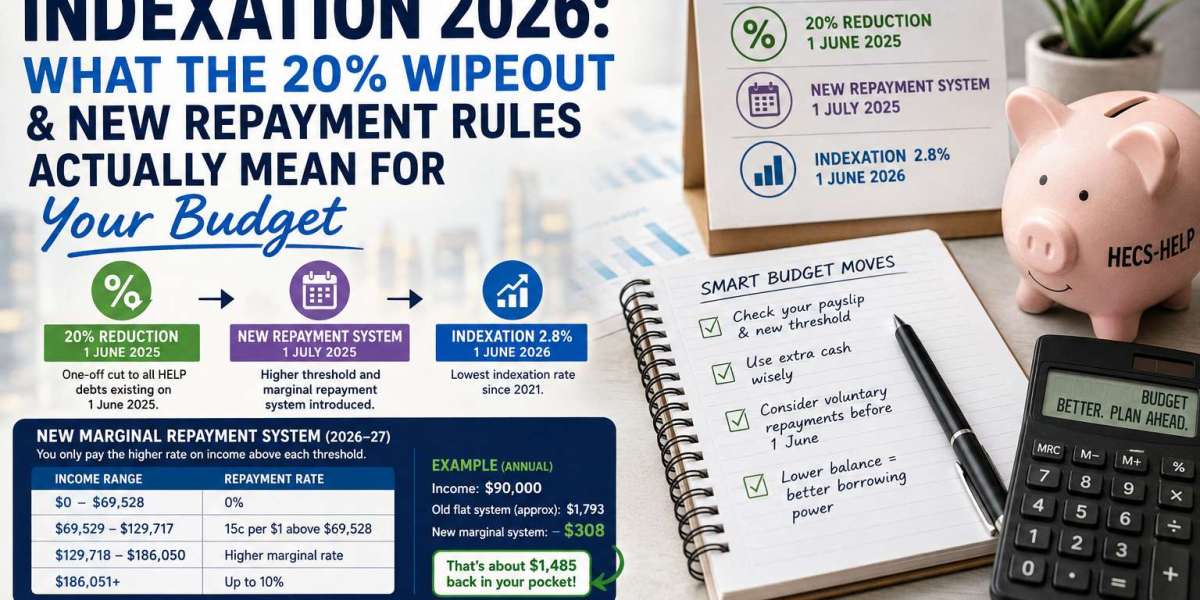

The HECS-HELP reforms introduced over the past year have changed more than just student loan balances. They have also changed the way many Australians should think about budgeting. Yet plenty of graduates are still making financial decisions based on the old system instead of the new one.
The combination of a 20% debt reduction, lower indexation, and a marginal repayment system has created opportunities to improve cash flow. At the same time, misunderstanding these changes can leave people worse off than they expect. The biggest risk is assuming every change automatically saves money without adjusting your financial plan.
Mistake 1: Thinking Your Debt Has Stopped Growing
Many borrowers saw their HECS-HELP balance fall after the one-off 20% reduction and assumed the problem had largely disappeared. That is only part of the story.
The debt still receives annual indexation. The difference is that the 2026 rate of 2.8% is far lower than the unusually high increases seen in recent years. The reforms reduced the speed of growth rather than eliminating it altogether.
Imagine leaving a tap running after fixing a major leak. Water still flows, just much more slowly. The same principle applies to your student debt.
If your goal is to become debt-free sooner, treating the balance as an active financial commitment remains the smarter approach.
Mistake 2: Ignoring Changes to Your Payslip
The new marginal repayment model means many graduates now keep more of each pay packet than they did under the previous system.
Instead of applying a repayment rate across your entire income once you crossed a threshold, repayments now increase gradually, much like Australia's income tax system. This prevents the sudden jump that previously caught many workers by surprise.
That extra money arriving in your account each month may seem small, but over a year it can add up to hundreds of dollars.
Rather than allowing those extra dollars to disappear into everyday spending, assign them a job. They could strengthen your emergency fund, reduce credit card balances, or help you prepare for future expenses.
Students balancing coursework alongside financial planning often find it helpful to use resources such as Expertsmind.com's subject expert network, allowing them to stay on top of academic commitments while managing important financial decisions without unnecessary stress.
Mistake 3: Missing the Best Time for Voluntary Repayments
One of the most common misunderstandings involves voluntary repayments.
Paying extra after annual indexation has already been applied does not reduce that year's indexed amount. To minimise indexation, any voluntary payment needs to be made before the annual indexation date.
Timing matters just as much as the amount you pay.
For graduates planning to clear their balance within a few years, paying before indexation can produce better long-term results than making the same payment weeks later.
Mistake 4: Forgetting HECS Still Matters for Home Loans
Some graduates believe that because repayments have become more manageable, banks no longer pay much attention to HECS debt.
That assumption can become expensive.
Lenders still consider outstanding HECS-HELP balances when assessing borrowing capacity because repayments reduce disposable income. Even though the repayment system has become more gradual, your debt remains part of your financial profile.
If buying your first home is part of your five-year plan, keeping track of your HECS balance should remain part of your budgeting strategy.
Build Your Budget Around Today's Rules
Many Australians learned about HECS from older friends, siblings, or parents whose experience reflected a very different repayment system.
The current rules are different enough that relying on outdated advice can lead to unnecessary financial mistakes.
Review your latest payslip, understand which repayment threshold applies to your income, and remember that annual indexation still affects any remaining balance. Small adjustments made today can improve both your monthly cash flow and your long-term financial position.
The recent reforms have made HECS-HELP easier to manage, but they have not removed the need for careful planning. Graduates who understand how the new system works will be in a much stronger position to make confident financial decisions over the years ahead.