
Maintaining a healthy, attractive landscape across a large property requires the right planting method, careful preparation, and consistent maintenance. Commercial properties often include extensive lawns, office campuses, industrial facilities, retail developments, and newly constructed sites where establishing grass can be both time-consuming and expensive. Traditional seeding methods may not always provide the coverage or efficiency needed for these projects. Commercial hydroseeding services offer a practical alternative by applying a specially prepared mixture of grass seed, water, mulch, and other suitable materials directly onto prepared soil.
For property owners, developers, and facility managers, hydroseeding can help establish green spaces while supporting soil protection and landscape improvement. The process is particularly useful when large areas need vegetation without the higher initial expense associated with installing mature sod. However, successful results depend on several factors, including soil quality, grass selection, drainage, weather, and proper watering. Understanding how hydroseeding works and how to plan a project can help property managers make informed decisions and achieve better long-term landscaping results.
What Are Commercial Hydroseeding Services?
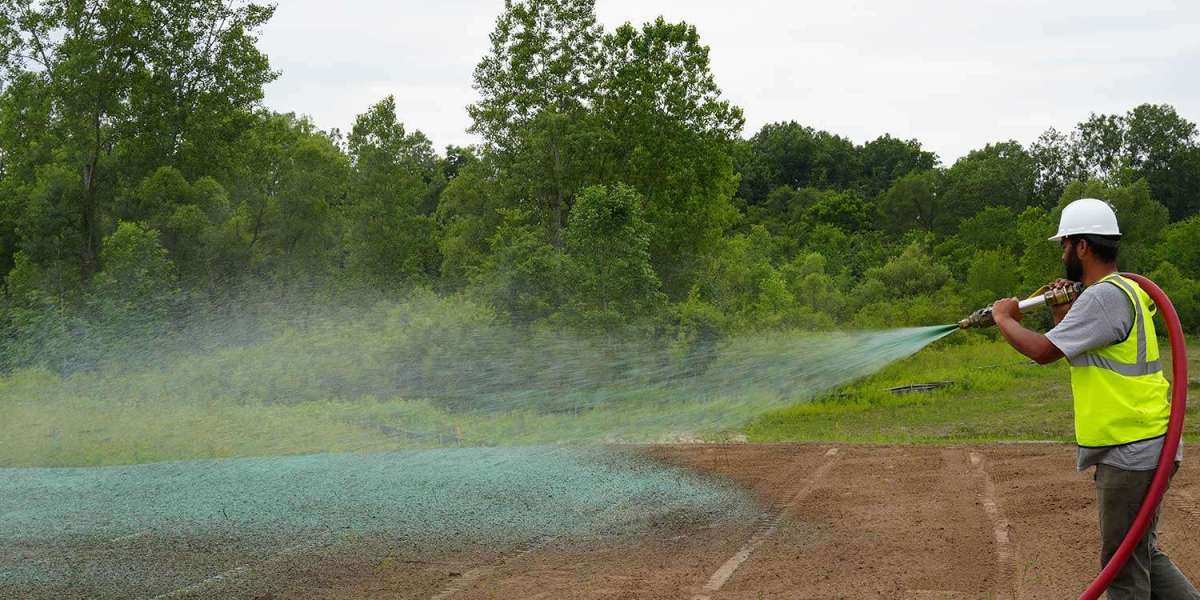
Commercial hydroseeding services involve applying a liquid mixture containing grass seed, water, fiber mulch, and, when appropriate, fertilizer or a binding agent to prepared ground. The materials are combined in specialized equipment and sprayed evenly across the designated area. This method helps distribute seed efficiently over large surfaces and supports contact between the seed and the soil. The mulch also helps retain moisture around the seeds, creating favorable conditions for germination when environmental conditions and watering are suitable.
Unlike sod installation, hydroseeding establishes grass from seed rather than placing mature turf over the ground. The lawn therefore needs time to germinate, develop roots, and become strong enough to withstand regular use. Although the mixture can help protect the seedbed from drying too quickly, it does not eliminate the need for irrigation or maintenance. Businesses should plan for an establishment period before expecting the area to function as a fully developed lawn.
This landscaping method is commonly used for office parks, commercial campuses, shopping centers, industrial properties, roadside areas, and construction developments. It can also help restore suitable areas disturbed by excavation, grading, or other site preparation activities. The right seed mixture depends on the local climate, soil characteristics, sunlight exposure, drainage conditions, and intended use of the property. A professional site assessment helps determine whether hydroseeding is suitable and which materials are most likely to perform well.
Why Large Properties Benefit From Hydroseeding
One of the main advantages of hydroseeding is its ability to cover extensive areas efficiently. Large commercial properties may contain several acres of open ground, making manual seed distribution difficult to manage consistently. Specialized hydroseeding equipment allows contractors to apply the seed mixture across broad areas in a relatively short time. This efficiency can help businesses coordinate landscaping with construction schedules and other property improvements while maintaining a consistent application plan.
Hydroseeding also offers potential benefits for soil protection. The fiber mulch helps cover exposed soil and reduce the impact of rainfall while the grass begins to grow. Once established, grass roots can help hold soil in place and reduce surface erosion. These benefits are particularly valuable on suitable graded areas and open landscapes where bare soil could otherwise be displaced by wind or rain. However, properties with steep slopes, concentrated runoff, or significant drainage problems may require additional erosion-control measures.
Another advantage is the flexibility to select grass varieties based on the property's needs. Some commercial landscapes require durable grass that can tolerate regular foot traffic, while others prioritize appearance, drought tolerance, or reduced maintenance. A suitable seed blend can help businesses balance these requirements with local growing conditions. Hydroseeding may also be more economical than installing sod across extensive areas, although the actual savings depend on site preparation, materials, labor, and ongoing care.
The Commercial Hydroseeding Process Explained
A successful hydroseeding project begins with evaluating and preparing the property. The contractor examines soil quality, drainage, slope, existing vegetation, and the total area requiring treatment. Preparation may include removing debris, managing weeds, loosening compacted soil, correcting grading issues, and adding topsoil or soil amendments when necessary. These steps are important because seeds need suitable conditions to germinate and develop healthy roots. Applying hydroseed to poorly prepared ground can lead to uneven growth and unnecessary repair costs.
After the site is prepared, the contractor selects an appropriate seed mixture and combines it with water, mulch, and any necessary additives. The mixture is loaded into specialized equipment and sprayed across the designated surface. Application rates and coverage should be adjusted to suit the seed type, soil conditions, and characteristics of the property. Particular attention may be needed around slopes, edges, and areas with different levels of sunlight or moisture. Consistent application helps reduce bare patches and supports more uniform grass establishment.
The final stage involves watering and maintaining the newly seeded area. The seedbed generally needs consistent moisture during germination, but excessive watering can cause runoff, puddling, or seed displacement. Watering schedules should reflect the grass variety, soil type, temperature, rainfall, and local climate. Property managers may also need to restrict foot traffic and delay mowing until the grass reaches an appropriate stage of development. Following professional maintenance instructions helps protect the investment and gives the new lawn a better chance to establish successfully.
Choosing the Right Grass Seed for Large Commercial Landscapes
Grass selection is an important part of planning commercial hydroseeding services. The most suitable varieties depend on regional climate, seasonal temperatures, sunlight, soil conditions, and the intended use of the property. A lawn surrounding an office building may require a different grass blend from an industrial site or a large recreational area. Contractors should consider these differences before selecting seed, rather than applying the same mixture to every project.
Sun exposure and water availability also influence seed selection. Areas receiving full sunlight may support different grass varieties than spaces shaded by buildings or mature trees. Properties with limited irrigation access may benefit from varieties suited to local rainfall patterns, although all newly seeded areas need appropriate moisture during establishment. Soil testing can help identify pH imbalances or nutrient deficiencies that may affect growth. Addressing these conditions before application can improve the likelihood of developing a healthy, resilient lawn.
Maintenance expectations should also guide the decision. Some grass varieties require more frequent mowing, irrigation, or fertilization than others. For commercial property managers, selecting a grass type that matches the available maintenance budget can help reduce future operating expenses. A knowledgeable contractor can recommend suitable options and explain the expected appearance, growth characteristics, and maintenance requirements. This planning helps ensure that the finished landscape meets both practical needs and visual expectations.
Commercial Hydroseeding Costs and Budget Planning
The cost of hydroseeding a large property depends on several variables, including the total area, seed mixture, soil condition, accessibility, and amount of preparation required. A relatively level site with suitable topsoil may need less work than a property containing compacted ground, weeds, uneven grading, or drainage problems. Contractors may calculate project costs by square footage, acreage, or the specific services included in the proposal. An on-site assessment is generally the best way to obtain a realistic estimate.
Materials can also influence the overall budget. Specialized grass seed blends, mulch, fertilizer, binding agents, and erosion-control products may have different costs depending on the project's requirements. Additional work such as grading, topsoil installation, soil amendments, and irrigation improvements can increase the initial investment. However, addressing these needs before seeding may help prevent uneven growth and expensive corrections later. Businesses should evaluate the entire project rather than focusing only on the initial application price.
When comparing estimates, property managers should confirm which services are included and which will be billed separately. A detailed quote should explain site preparation, seed selection, application, and any recommended follow-up work. It is also useful to ask about watering responsibilities, expected germination conditions, maintenance requirements, and policies regarding areas that fail to establish. Comparing these details helps businesses understand the true value of each proposal and plan for both immediate expenses and long-term landscape care.
How to Find a Reliable Hydroseeding Contractor
Finding an experienced contractor is essential when managing a large landscaping project. Businesses searching for residential hydroseeding near me may also discover local providers who handle smaller lawns as well as larger commercial properties. However, not every contractor has the equipment, staffing, or experience required for extensive sites. Property owners should verify that the company has completed comparable projects and understands the specific requirements of commercial landscaping.
Before hiring a provider, ask how the company evaluates soil conditions, chooses seed varieties, and prepares the site. A reliable contractor should be able to explain the application process, expected establishment period, irrigation requirements, and potential challenges. Request a written estimate that identifies the work to be completed, the materials to be used, and any additional services that may be necessary. Reviewing previous projects and speaking with past clients can also provide useful insight into the company's workmanship and communication.
It is equally important to discuss aftercare and realistic expectations. Grass growth depends on environmental conditions, seed quality, watering, and maintenance, so results can vary even when the application is performed correctly. A professional contractor should explain these limitations rather than promising instant growth or guaranteed success under every circumstance. Ask whether maintenance guidance, follow-up inspections, or assistance with unsuccessful areas is available. Clear communication helps property managers understand their responsibilities and supports a more successful project.
Maintaining a Hydroseeded Lawn for Long-Term Results
The work does not end when the hydroseeding mixture has been applied. During the early stages, the seedbed must receive enough moisture to support germination without becoming saturated. Property managers should follow the contractor's watering recommendations and adjust them when rainfall or changing temperatures affect the soil. Regular observation can help identify dry patches, runoff, or other issues before they become more serious. Equipment and foot traffic should be kept away from vulnerable areas whenever practical.
As the grass develops, maintenance requirements gradually change. Once the lawn is sufficiently established, watering can usually be adjusted according to the grass variety, soil conditions, and local climate. Mowing should begin only when the grass has reached an appropriate height and the soil can support equipment without causing damage. Fertilization should be based on the grass's needs and, where appropriate, soil-test recommendations. Applying excessive fertilizer or mowing too early can weaken young grass and interfere with healthy establishment.
Long-term care may include seasonal inspections, weed management, irrigation adjustments, and reseeding areas that remain thin. Commercial properties should incorporate these tasks into their regular landscape maintenance schedule. Addressing small problems early can help preserve the lawn's appearance and reduce the likelihood of larger restoration projects. With appropriate care, a properly planned hydroseeding project can provide a practical foundation for attractive, functional outdoor spaces.
Conclusion
Commercial hydroseeding services offer businesses a practical way to establish grass across large properties while managing planting efficiency and landscaping costs. The method can support consistent seed distribution, help retain moisture, and contribute to soil protection as vegetation develops. Its effectiveness, however, depends on proper site preparation, suitable grass selection, appropriate application, and consistent maintenance.
Before starting a project, property owners should evaluate the condition of the site, compare available landscaping methods, and request detailed estimates from experienced contractors. Understanding preparation requirements, irrigation responsibilities, and ongoing maintenance costs helps establish realistic expectations and supports better planning. Choosing a provider with relevant experience can also reduce avoidable problems during the establishment period.
Whether you are landscaping a commercial campus, completing a new development, or restoring ground disturbed by construction, hydroseeding may be a suitable option for creating healthy green spaces. By combining professional application with a well-planned maintenance routine, businesses can improve the appearance and usability of their outdoor areas while supporting the long-term value of their properties.