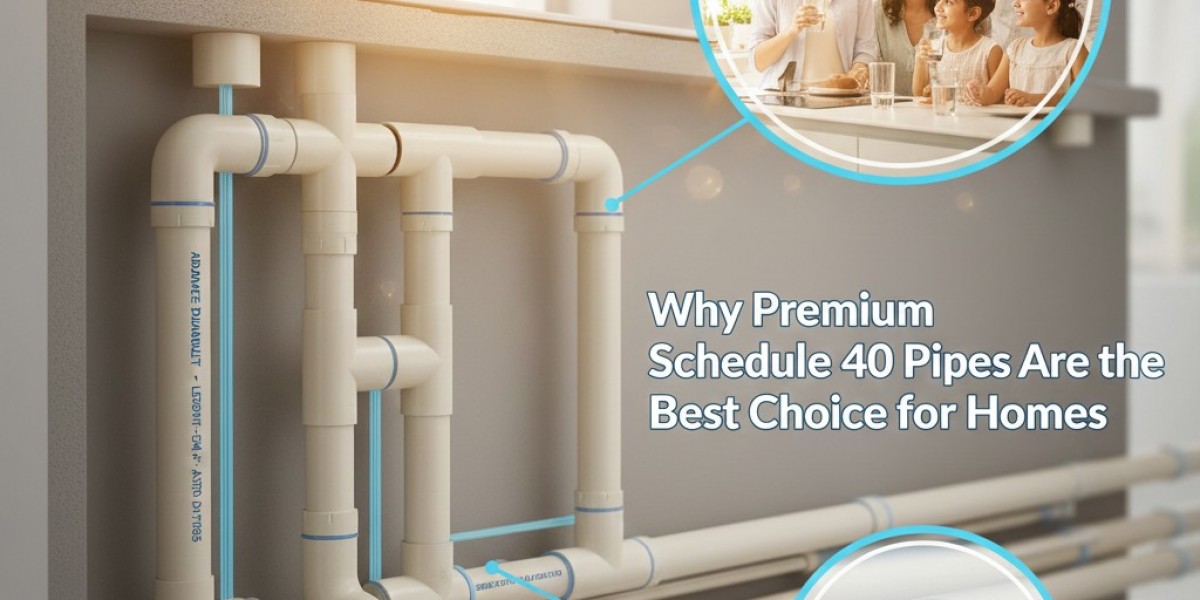

There is a specific kind of dread that only a homeowner knows. It’s that faint, rhythmic thud-thud behind a bathroom wall or the sight of a damp patch blooming like an unwanted flower on your expensive Italian lounge tiles. In Pakistan, we spend months obsessing over the marble for the kitchen or the exact shade of "off-white" for the exterior, but we barely give a second thought to the uPVC piping or Schedule 40 pipes systems buried deep within our structures.
It’s a massive mistake. Honestly, the pipes are the veins of your home. When you experience a sudden drop in pressure rating during a shower, or worse, a burst line in the middle of the night, you realize that your house is only as good as its plumbing.
This is where Schedule 40 pipes come into play. They aren't just plastic tubes; they are the structural backbone of a modern, stress-free residence. I’ve seen too many people cut corners here, only to regret it when they have to rip out expensive masonry to fix a five-cent leak. Choosing Lead-Free PVC with the correct wall thickness is the only way to ensure a lifespan and longevity that actually matches the brick and mortar of your house.
Decoding the "Schedule 40" Mystery
I get asked all the time: "What does 'Schedule' even mean?" Simply it refers to the wall layers or thickness. In the world of Polyvinyl Chloride (PVC), Schedule 40 dimensions represent the "Goldilocks" zone for house plumbing.
Not too thin: Unlike the flimsy domestic pipes often found in local hardware stores that crack if you look at them wrong.
Not overkill: It isn't as massive or huge as heavy industrial grade PVC like Sch 80.
The Sweet Spot: It’s robust enough to handle the "real world" of a family home.
When you are looking at these products, keep an eye out for the ASTM D1785 stamp. That’s the international gold standard. If a pipe doesn't have that, it’s just a gamble. For water distribution lines, you need something designed to handle a consistent pressure rating usually between 280 to 600 PSI depending on the Nominal Pipe Size (NPS).
A quick side thought: In our local climate, where the ground shifts during the monsoon and temperatures soar in the summer, that extra "meat" in the pipe wall provides the impact strength needed to prevent cracks. You want a pipe that handles the stress so you don’t have to.
The Health Angle: Why "Lead-Free" is Non-Negotiable
Here is something that genuinely bothers me: I’ve noticed a lot of old-school contractors still pushing cheap, recycled piping materials because they are easier on the budget. But here’s the catch many of those low-grade pipes contain lead stabilizers.
When you are talking about potable water (the stuff your kids use to brush their teeth or the water you use to cook), lead is a deal-breaker. This is why choose lead-free pipes for drinking water is the most important question you can ask your builder.
Why I insist on Lead-Free PVC:
Zero Contamination: No heavy metals leaching into your morning tea.
Non-toxic material: It’s certified for water safety and is safe for families.
Peace of Mind: Using a brand like Adamjee Durabuilt means you aren't gambling with your health.
Why build a beautiful home if the water running through it isn't pure? Frankly, it’s a health hazard disguised as a "saving."
The "Install It and Forget It" Philosophy
In my experience, the best plumbing is the kind you never have to think about again. That level of system reliability comes from two things: material quality and installation. Schedule 40 pipes offer incredible corrosion resistance. Unlike old metal pipes, these won't rust or scale over time, ensuring your water stays clean for decades.
However, a pipe is only as strong as its weakest joint. You need to focus on:
Solvent Cementing: The chemical bond that fuses the pipe to the fitting.
Fitting Compatibility: If you’re using uPVC fittings that aren't perfectly matched to your Schedule 40 pipes, you’re asking for trouble.
When these components bond correctly, they essentially become one single, continuous piece of plastic. This creates leak-proof joints that can withstand high burst pressure. It’s the ultimate cost-effective piping solution for home construction paying a bit more for quality today saves you from the absolute nightmare of "ripping out walls" five years down the line.
Comparative Analysis: Making the Smart Choice
When people are comparing Schedule 40 vs. Schedule 80 for home use, they often think thicker is always better. While Sch 80 is excellent, it’s often overkill and harder to work with for a standard two-story house. Schedule 40 pipes are the best schedule 40 pipes for residential plumbing because they offer the perfect balance of weight, ease of installation, and cost.
One technical detail I find fascinating and most people overlook is thermal expansion. In cities like Lahore or Karachi, where the sun is relentless, pipes expand and contract. Premium uPVC piping systems are engineered to handle this movement without becoming brittle. This durability of uPVC pipes in high-pressure systems is what allows them to survive our harsh summers and unpredictable winters. It’s about being weather resistant in a way that generic pipes just aren't.
Summary of Benefits at a Glance
Exceptional Wall Thickness: Provides the necessary impact strength for underground and in-wall use.
Health Conscious: Lead-Free PVC ensures zero contamination for your family.
High Pressure Tolerance: Meets ASTM D1785 standards for consistent water flow.
Reliable Joints: Designed for perfect solvent cementing to ensure leak-proof joints.
Conclusion: Building for the Next Generation
The house you dream of is likely the biggest investment you’ll ever make. It’s a place of sanctuary and safety. Don't let the foundation of that sanctuary be compromised by sub-par plumbing. By choosing Schedule 40 pipes, you are investing in industrial grade PVC quality for a residential setting. You’re choosing a reliable water system that will serve your family for a lifespan and longevity of 50 years or more.
Beyond plumbing, if your construction project or warehouse requires specialized ducting or wiring protection, ensure you contact the best Electrical Conduit Pipe Fittings manufacturer in Pakistan for a complete safety solution. Frankly, "good enough" isn't good enough when it comes to the water your family drinks or the electrical safety of your walls. Stop settling for generic alternatives. Build with confidence, build with health in mind, and switch to Adamjee Durabuilt. It’s time to give your home the foundation it deserves.
Common Questions (FAQs)
What actually makes a pipe "Schedule 40"?
It mostly comes down to the wall thickness and the Nominal Pipe Size (NPS). Schedule 40 defines a specific thickness that allows the pipe to handle higher internal pressure compared to standard thin-walled PVC, making it the best choice for homes.
Can I use these for both hot and cold water?
Schedule 40 is perfect for cold water distribution and drainage. However, for high-temperature hot water lines (like those coming directly from a boiler), you would typically look into PPRC or CPVC. For everything else, Sch 40 is your workhorse.
Is lead-free really that important for my kitchen?
Absolutely. Lead is a heavy metal that can leach into potable water over time. Choosing Lead-Free PVC ensures your drinking water remains non-toxic and safe for families. Don't compromise on this.
How long do these pipes realistically last?
When installed correctly using proper solvent cementing, these pipes have an incredible lifespan and longevity. You can realistically expect them to last 50 years or more, as they are completely weather resistant and won't corrode.
Why should I choose a premium brand over local generic pipes?
Premium brands like Adamjee Durabuilt provide certified for water products that meet ASTM D1785 standards. They offer higher impact strength and rigorous quality control (like batch numbering for traceability), which generic "no-name" pipes simply cannot guarantee.