
Holographic Collaboration: The Future of Remote Mobile Meetings
In 2026, enterprise mobility has transitioned from simple device management to a Hyper-Automated Workspace where AI-native mobile agents handle complex workflows autonomously. The integration of 6G-ready architectures and Wi-Fi 7 has made "Mobile-First" the standard for every industry, enabling seamless high-fidelity augmented reality for remote field operations.
Security has evolved into Continuous Adaptive Trust, where biometric and behavioral signals verify identity in real-time without interrupting the user experience. Furthermore, the rise of Sustainable Mobility is pushing organizations to adopt circular device lifecycles and AI-optimized power management to meet global ESG goals.
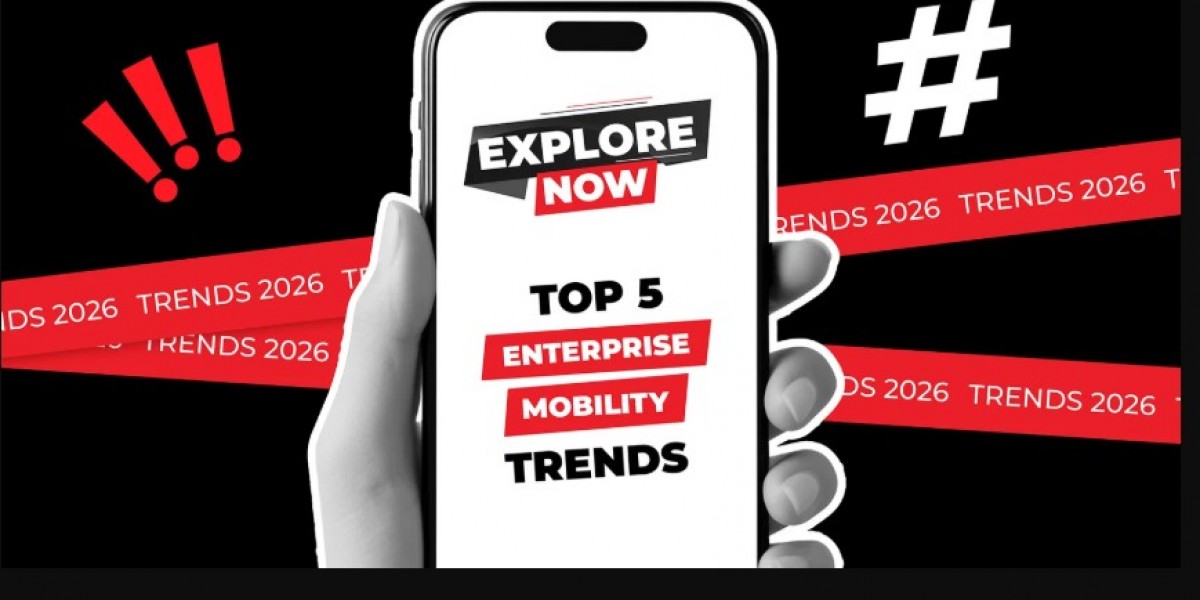
The Workforce Unbound: Top Enterprise Mobility Trends in 2026
The definition of the "office" has officially dissolved. In 2026, enterprise mobility is no longer about providing a smartphone and a VPN; it is about creating a seamless, intelligent, and secure digital environment that follows the employee wherever they go. Driven by advancements in AI, edge computing, and ultra-low latency connectivity, here are the top trends shaping enterprise mobility this year.
The Rise of Agentic Mobile Workflows
We have moved past simple mobile apps. In 2026, enterprises are deploying Agentic AI—autonomous software agents integrated directly into mobile operating systems.
Autonomous Tasking: Instead of an employee manually entering data into a CRM, a mobile AI agent listens to a client meeting, extracts action items, updates the pipeline, and schedules follow-up emails instantly.
Proactive Assistance: These agents anticipate needs based on location and calendar, such as automatically downloading necessary technical schematics as a field engineer approaches a remote job site with limited connectivity.
Zero-Trust Network Access (ZTNA) 2.0
With the perimeter completely gone, security in 2026 is "Identity-Centric" and "Always-On." ZTNA 2.0 utilizes continuous authentication to ensure mobile security.
Behavioral Biometrics: Instead of just a fingerprint at login, the device continuously analyzes the user’s typing rhythm, gait (via accelerometer), and touch pressure. If the "behavioral signature" changes, the device instantly locks sensitive corporate data.
Micro-Segmentation on the Go: Enterprise mobility management (EMM) platforms now automatically segment network access based on the sensitivity of the local Wi-Fi, switching to encrypted private 5G slices when a user enters a high-risk public area.
Augmented Reality (AR) for the "Deskless" Workforce
While office workers benefit from mobility, the real revolution in 2026 is for the 80% of the global workforce that is deskless.
Read More @ https://www.techdogs.com/td-articles/techno-trends/top-enterprise-mobility-trends
Spatial Field Service: Technicians use AR-enabled tablets or lightweight smart glasses to overlay digital twins onto physical machinery. This allows for "See-What-I-See" remote expert assistance, drastically reducing the need for repeat site visits.
Immersive Training: Onboarding for high-stakes roles—from surgeons to oil rig operators—is now conducted via mobile VR/AR modules, allowing for muscle memory development in a risk-free, mobile environment.
[Table: The Evolution of Enterprise Mobility]
Feature | 2023 Reality | 2026 Trend |
Connectivity | 5G / Wi-Fi 6 | 5G Advanced / Wi-Fi 7 / 6G Ready |
Device Policy | BYOD (Bring Your Own Device) | CYOD (Choose Your Own Device) + COPE |
Security | Static VPN / MFA | Continuous Behavioral Biometrics |
Primary Tool | Mobile Apps | Autonomous AI Mobile Agents |
Convergence of Private 5G and Wi-Fi 7
In 2026, the "dead zone" is a thing of the past. Enterprises are building Converged Wireless Fabrics that intelligently switch between Private 5G and Wi-Fi 7.
Deterministic Connectivity: For manufacturing and logistics, this convergence ensures that mobile robots and handheld scanners never lose a packet of data.
Extreme Bandwidth: This allows for the mass deployment of mobile-connected IoT sensors that monitor everything from pallet temperature to employee heart rate in high-stress environments.
Sustainable Mobility & Circular Device Management
Corporate Social Responsibility (CSR) has moved into the IT department. In 2026, the environmental impact of millions of mobile devices is a top priority.
Device-as-a-Service (DaaS): Most enterprises have moved away from owning hardware, opting for DaaS models where vendors are responsible for the recycling and refurbishing of devices.
AI-Driven Energy Harvesting: New mobile chipsets utilize AI to harvest ambient energy (radio waves and light), extending battery life and reducing the frequency of charging cycles, thereby lowering the carbon footprint of the mobile fleet.
About Us TechDogs:
TechDogs is a leading digital platform delivering personalized, real-time technology content. From in-depth articles and expert interviews to white papers, case studies, reports, videos, and global events, TechDogs helps readers stay informed in an ever-evolving tech landscape. Powered by expert contributors and an active global community, TechDogs reaches millions of readers across 67 countries.
Contact Us TechDogs:
For more information, please visit www.techdogs.com
For Media Inquiries, Please Contact:
LinkedIn | Facebook | X | Instagram | Threads | YouTube | Pinterest