
For centuries, agreements have relied on trust, paperwork, intermediaries, and legal enforcement. Even in the digital age, most contracts remain rooted in manual processes drafted by humans, interpreted by courts, and enforced through institutions that are often slow, expensive, and geographically constrained. Smart contracts represent a fundamental break from this model. By embedding contractual logic directly into software that runs on decentralized blockchains, smart contracts are redefining how digital agreements are created, executed, and enforced.
This transformation is not incremental; it is structural. Smart contracts remove ambiguity, automate enforcement, and enable global participation without centralized oversight. As a result, they are reshaping industries ranging from finance and supply chains to digital identity and intellectual property. Understanding why smart contracts are transforming digital agreements requires examining not just their technical features, but the systemic inefficiencies they eliminate.
The Limitations of Traditional Digital Agreements
Despite advances in cloud computing and digital signatures, most digital agreements today still rely on trust-based frameworks. Parties must trust that:
Counterparties will act honestly
Intermediaries will enforce rules fairly
Legal systems will resolve disputes efficiently
In practice, this trust is costly. Contracts often require escrow services, manual reconciliation, legal review, and enforcement mechanisms that vary across jurisdictions. Cross-border agreements are especially complex, introducing delays, compliance risks, and high administrative overhead.
Moreover, traditional contracts are static. Once signed, enforcing them requires human interpretation and intervention. This creates room for disputes, delays, and selective enforcement issues that scale poorly in a global, always-on digital economy.
Smart Contracts as Self-Enforcing Agreements
Smart contracts fundamentally change the nature of agreements by making them self-executing. Rather than relying on external enforcement, smart contracts automatically perform actions when predefined conditions are met.
For example, a payment contract can release funds the moment goods are delivered and verified. A licensing agreement can distribute royalties instantly whenever digital content is used. An insurance contract can trigger payouts based on verifiable data feeds without claims processing.
This automation removes the gap between agreement and execution. There is no waiting period, no interpretation layer, and no discretion once the conditions are satisfied. The contract enforces itself exactly as written.
Eliminating the Need for Intermediaries
One of the most transformative aspects of smart contracts is their ability to reduce or eliminate intermediaries. Traditional agreements depend on third parties banks, platforms, escrow agents, or legal institutions to facilitate trust. These intermediaries increase costs and introduce single points of failure.
Smart contracts replace intermediaries with deterministic code and decentralized consensus. The blockchain itself acts as the neutral execution environment, ensuring that no single party can alter outcomes unilaterally.
This shift has measurable impact. In decentralized finance, smart contracts manage lending, trading, and settlement processes that once required banks and brokers. Transaction settlement that previously took days now occurs in minutes or seconds, often at a fraction of the cost.
Transparency and Verifiability Redefine Trust
In traditional agreements, trust is built through reputation, regulation, and legal recourse. Smart contracts replace these mechanisms with verifiable transparency.
Smart contract code is typically public and auditable. Anyone can inspect the rules governing an agreement, verify how funds are handled, and observe how the contract behaves over time. This transparency reduces information asymmetry and discourages opportunistic behavior.
In digital ecosystems where participants may never meet or share a jurisdiction, this form of trust is far more scalable than institutional assurances. Trust is no longer placed in people or organizations, but in open code and cryptographic verification.
Precision and Reduction of Ambiguity
Legal contracts are often intentionally flexible, using language that allows for interpretation. While this can be useful in human contexts, it also creates ambiguity and dispute potential. Smart contracts, by contrast, require precision.
Every condition, trigger, and outcome must be explicitly defined in code. While this rigidity requires careful upfront design, it dramatically reduces misunderstandings later. Parties know exactly what will happen under every defined scenario.
This precision is especially valuable in high-volume digital interactions, such as microtransactions, automated royalties, or machine-to-machine agreements, where manual oversight is impractical.
Enabling Global, Borderless Agreements
Smart contracts operate on global blockchain networks that are not bound by national borders. This allows parties from different countries to enter agreements without navigating incompatible legal systems or relying on international intermediaries.
For freelancers, creators, and digital-native businesses, this opens new possibilities. Payments, licensing, revenue sharing, and governance can all be handled programmatically, reducing reliance on region-specific platforms.
While regulatory considerations still exist, the underlying execution layer is inherently global, making smart contracts a powerful tool for international digital commerce.
Real-World Applications Driving Adoption
The transformation of digital agreements by smart contracts is already visible across multiple sectors:
Finance: Automated lending, derivatives, and settlement agreements execute without banks or clearinghouses.
Digital content: Artists and developers use smart contracts to manage royalties and ownership transparently.
Supply chains: Delivery and payment agreements trigger automatically based on verified logistics data.
Governance: Organizations use smart contracts to enforce voting outcomes and treasury management without centralized control.
These applications demonstrate that smart contracts are not theoretical they are actively replacing traditional contractual mechanisms in production environments.
Risk, Security, and the Need for Assurance
Despite their advantages, smart contracts introduce new risks. Code errors, flawed assumptions, or economic vulnerabilities can lead to irreversible losses. Unlike traditional contracts, flawed smart contracts cannot be reinterpreted by courts after the fact.
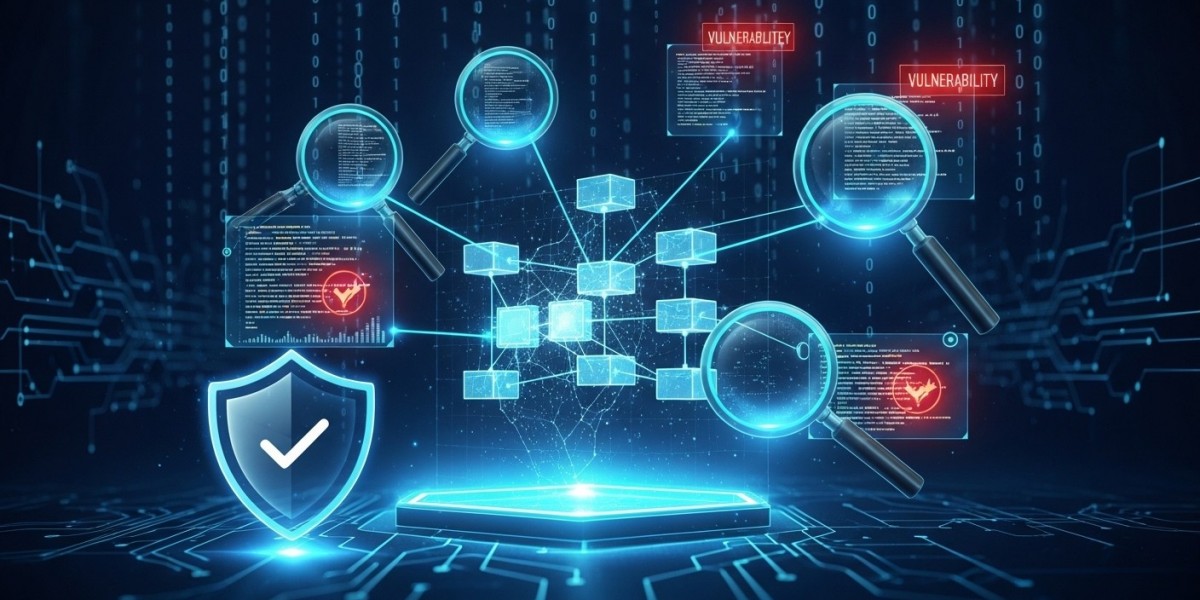
This has elevated the importance of Smart Contract Auditing as a core component of digital agreements. A rigorous Smart Contract Audit examines not only code correctness, but also logical consistency and economic soundness. As adoption grows, organizations increasingly rely on specialized expertise from a Smart Contract Audit Company to validate trust before deployment.
Security and reliability are not optional in automated agreements they are the foundation on which trustless systems depend.
A Shift From Legal Enforcement to Technical Enforcement
Perhaps the most profound transformation lies in how agreements are enforced. Traditional contracts rely on the threat of legal action. Smart contracts rely on technical certainty.
This does not eliminate the role of law entirely, but it changes its function. Instead of enforcing routine execution, legal systems increasingly focus on edge cases, disputes over intent, or off-chain representations. The day-to-day operation of agreements, however, moves to autonomous systems that do not require interpretation or enforcement.
This shift dramatically lowers friction and cost, making complex agreements viable at scales that were previously impossible.
The Long-Term Implications for Digital Agreements
As smart contracts mature, they are likely to become foundational infrastructure for the digital economy. Agreements will be designed with execution in mind from the outset, blending legal intent with programmable logic.
Future digital agreements may:
Execute continuously rather than episodically
Adapt based on real-time data
Integrate directly with financial and governance systems
This evolution points toward a world where agreements are not static documents, but living systems that coordinate value and behavior autonomously.
Conclusion
Smart contracts are transforming digital agreements by replacing trust-based enforcement with automated, transparent, and verifiable execution. They eliminate intermediaries, reduce ambiguity, enable global participation, and dramatically lower the cost of coordination.
While challenges remain particularly around security, design, and regulation the trajectory is clear. As digital interactions become more complex and global, traditional contractual frameworks struggle to keep pace. Smart contracts offer a new model, one built for scale, precision, and automation.
In this sense, smart contracts are not just improving agreements they are redefining what agreements can be in a digital-first world.